
Limepay
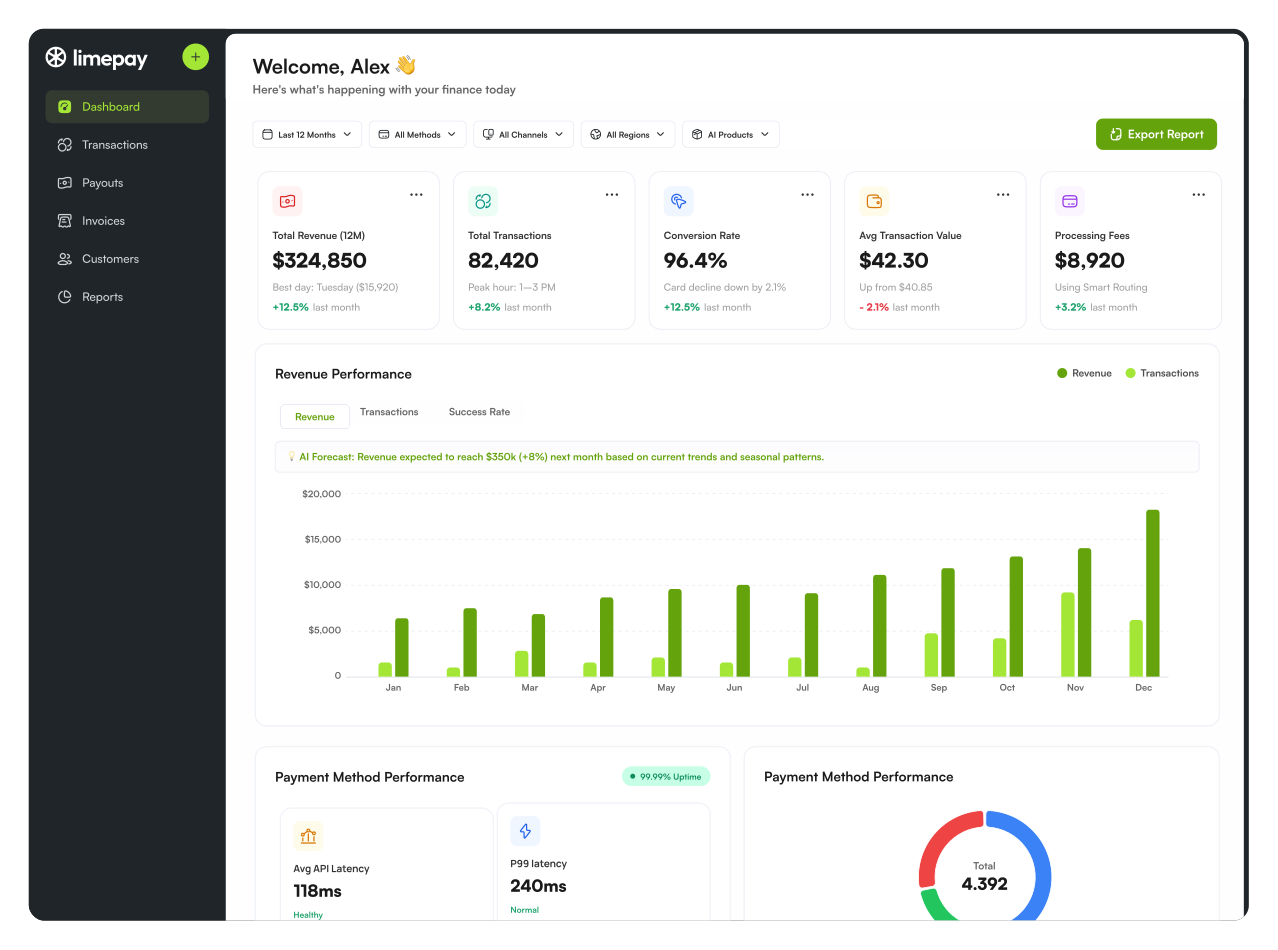
A more coherent home for transactions, payouts, invoices and customers in a complex payment system.
Role
Product Designer: product framing, information architecture, UX flows, interaction patterns and visual system
Challenge
Surface important financial information without overwhelming finance, operations and support teams with different priorities.
Goal
Unify everyday payment workflows in a product that feels trustworthy and can grow with new features.
Overview
Project goals
- Modernize the visual language and branding of the existing payment system
- Unify transactions, invoices, payouts, and customers into a coherent platform
- Improve visibility into key business and operational metrics
- Reduce cognitive load for everyday workflows
- Make the system easier to extend with new payment methods and features
- Create a solid foundation that works for finance, operations, and product teams
Key challenges
- Complexity vs clarity
Payment systems generate large volumes of data. The challenge was to surface what matters without overwhelming users. - Multiple user roles
The same product needs to serve finance managers, operations teams, and support specialists, each with different priorities. - Trust and consistency
In fintech, even small inconsistencies in metrics, terminology, or statuses can reduce trust. - Future scalability
The platform needed to feel ready for new markets, products, and AI-assisted features without requiring constant redesigns.
My role
I worked on this project as a Product Designer, owning the process end-to-end:
- Product thinking and problem framing
- Information architecture
- UX flows and interaction patterns
- Visual system and component logic
- Data modeling and realistic content scenarios
I approached this conceptual project as if it were a production system, checking decisions against realistic fintech patterns and constraints.
Dashboard
Dashboard
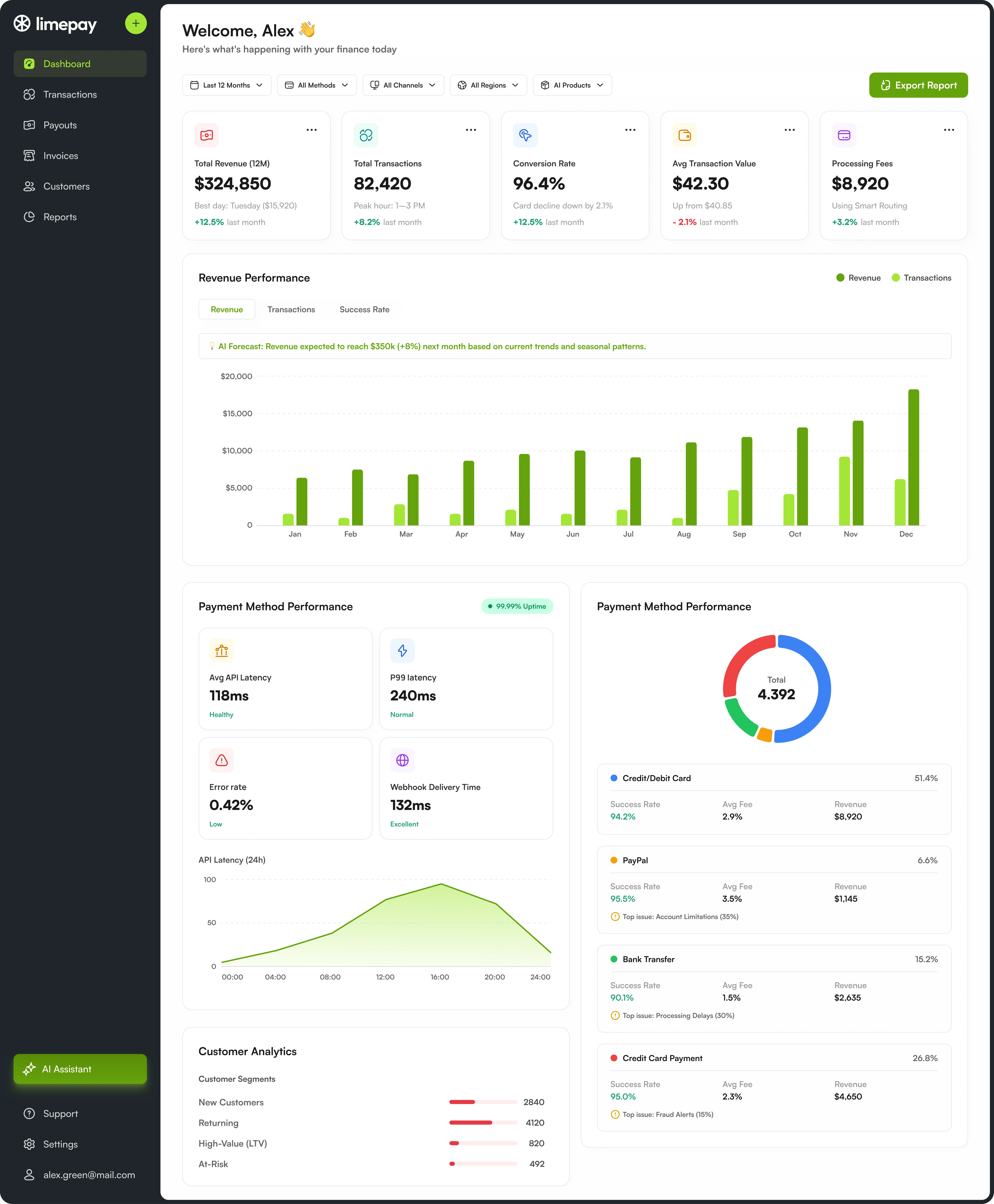
The dashboard was designed as the primary decision-making surface. Its job was not to show everything, but to give a fast, reliable overview of system health, business performance and potential risks in one place.
Transactions
Transactions
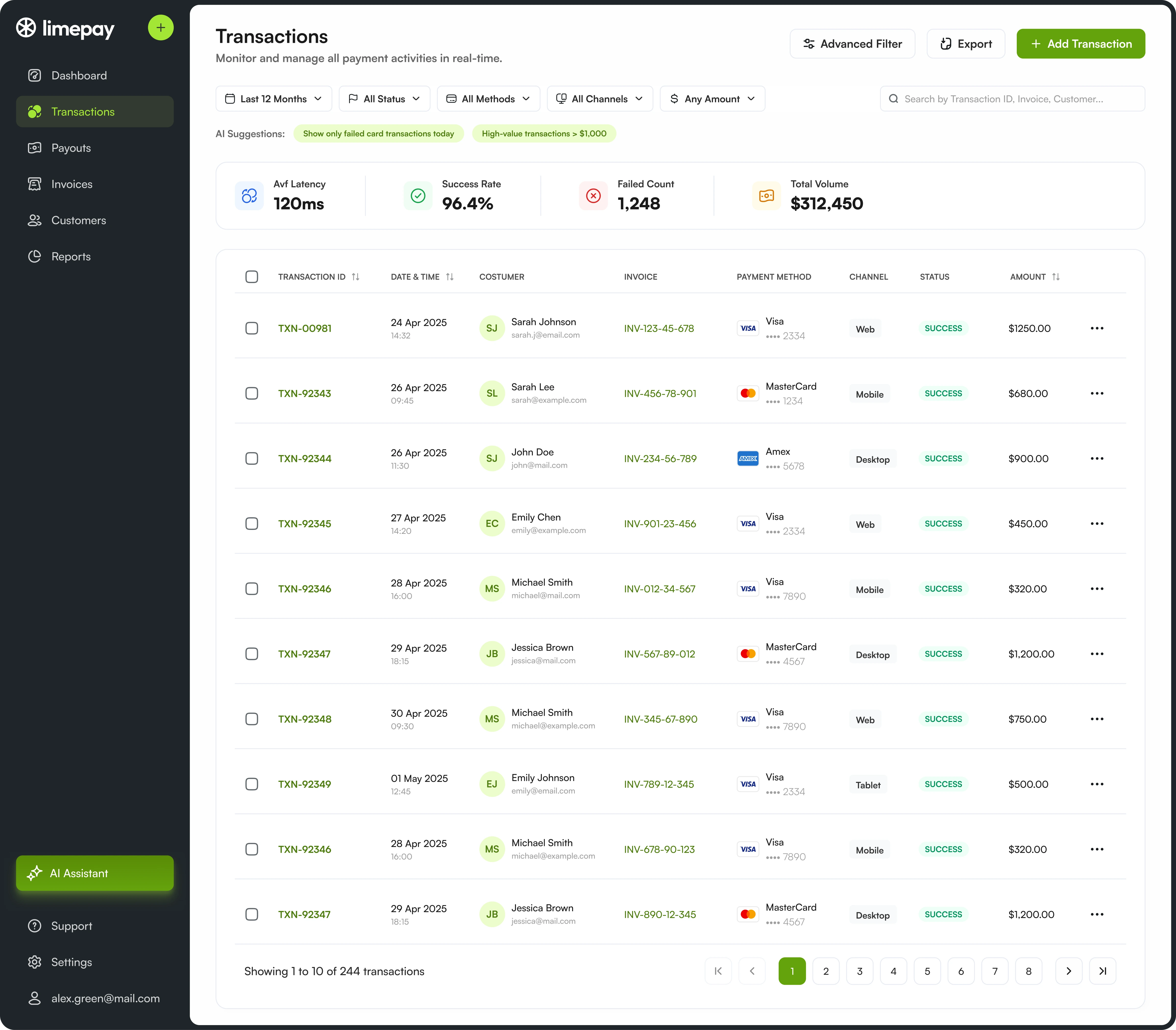
The Transactions page gave operational teams a detailed, filterable view of individual payments. People could trace issues, validate successful transactions and understand behavior across channels and methods without losing the broader context.
Payouts
Payouts
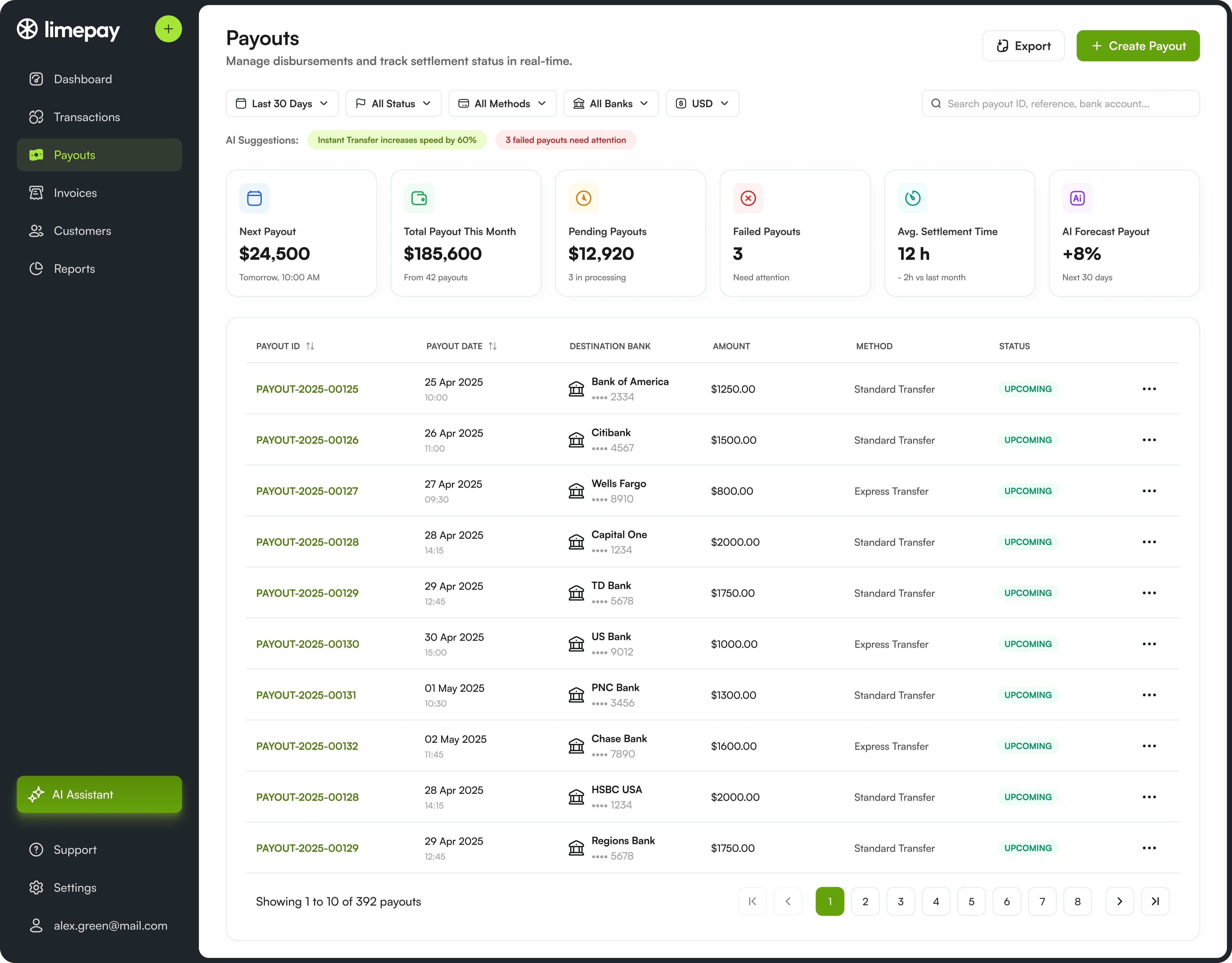
The Payouts page focused on outgoing funds, payout statuses and settlement timelines. Financial teams needed to understand when and how money would move, and spot potential delays quickly.
Invoices
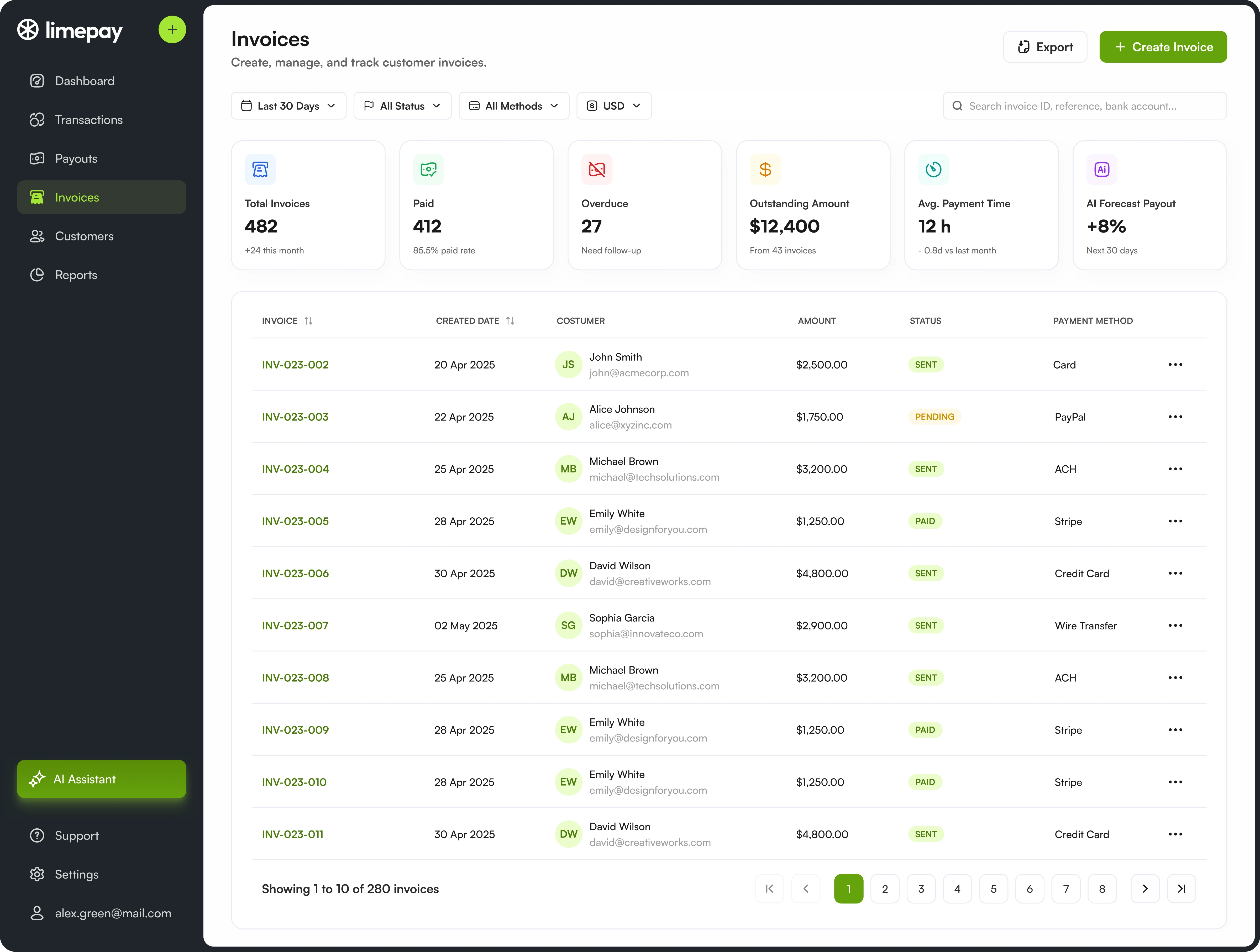
Invoices
The Invoices page clarified invoice statuses, outstanding amounts and payment timelines. That visibility supports follow-up actions such as reminders and payment tracking.
Customers
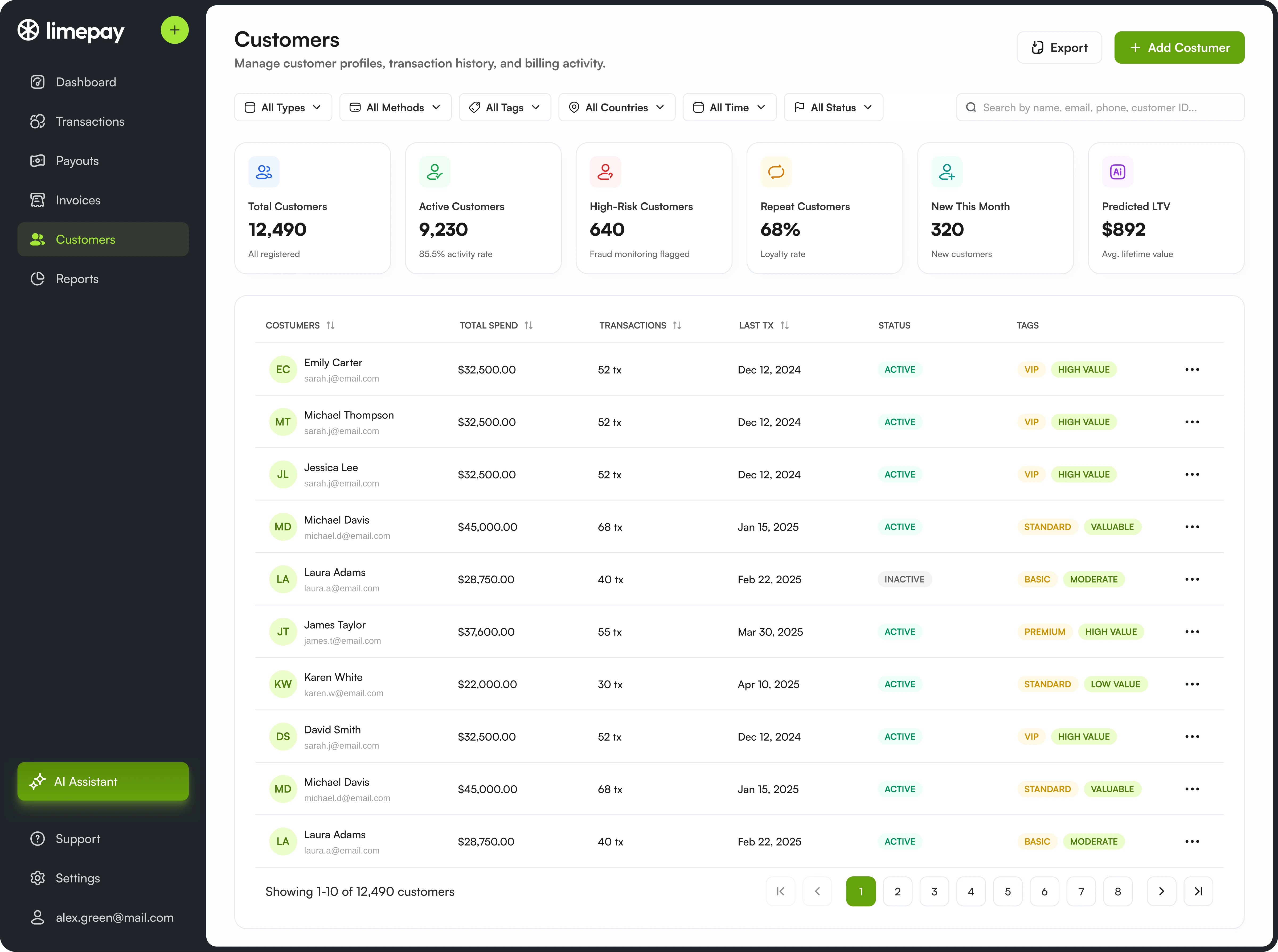
Customers
Customer profiles brought together payment history and value indicators so teams could identify active, valuable or risky accounts and make better-informed decisions.
Summary
What this work changed
Limepay is a concept case, not a shipped product claim. It shows how I would structure a multi-module fintech system around clarity, consistency and credible day-to-day workflows.